



Stress is all around us and at times it is unavoidable. Stress can cause many different health issues and it can especially impact us and our health when it is chronic and sustained for long periods of time. Digestive distress is greatly impacted by stress, this includes; bloating, gas, constipation diarrhea, IBS symptoms, and bacterial overgrowth. Now you might be asking yourself how the heck is stress causing me to get bloated. It is actually pretty straight forward and very common with the average American diet and lifestyle.
Stress, especially chronic stress, causes your body to produce cortisol in excess. This is sending a signal to your brain saying that it is not safe and we need to go into survival mode. This is where that common term of “fight or flight” comes into play. Your body begins to hold onto everything to survive, in turn your digestive system slows way down to preserve energy. This can also occur when you are undereating as well. This is where most people will feel bloated after anything they eat or drink and get constipated often.
Another factor that comes into play when looking at the connection between the gut and stress is stomach acid. When the body is under massive amounts of stress you produce significantly less stomach acid. What happens when you do not produce enough stomach acid? Your food can not digest properly and the food you eat sits in your stomach and can produce gas, bloating, and discomfort. If this persists too long people end up experiencing acid reflux. Also, a long term effect of this is an increased risk of getting SIBO or small intestine bacterial overgrowth.
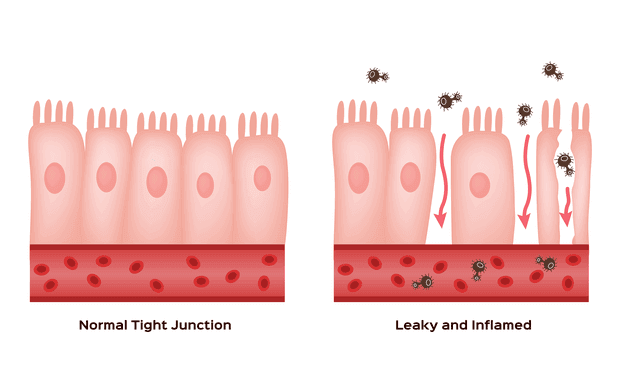
Intestine permeability is also impacted by stress. This is another viral term that is more commonly known as “leaky gut”. Leaky gut can be influenced by stress. This can happen because the intestinal lining is one cell thick and the cells are linked together. When the body is stressed these links become very loose and can cause food to “leak” through. This is also why people are getting diagnosed with 1000 food allergies. It is not the food’s fault it is the state of your gut and the amount of stress being put on the body. Below is a great reference of what we are talking about here.
.
.
Lastly, stress can cause estrogen dominance by depleting progesterone and increasing estrogen. A body that is filled with too much estrogen can cause the pH of the stomach to shift over time. This makes the small intestine a perfect place for the bad bacteria in your large intestine to migrate to. As the bad bacteria makes its way to the small intestine it will likely cause SIBO, or small intestine bacterial overgrowth.
So, you are bloated, constipated and frustrated and you do not know what you should do next. Here are some helpful tips in navigating your body’s connection between stress and digestion.
Tips and Tricks For Optimal Digestion:
1. Get into a place of rest and digest.
This one is so important. When trying to lower stress you should focus on how you currently deal with stress. Do you go for a run or go to the gym? This is not an optimal way of lowering stress, in fact it will do the opposite. Incorporate parasympathetic activities, this includes yoga, hiking, walking, pilates and just being outdoors more.
2. 7-9 hours of sleep every single night.
This is a non negotiable. Sleep is a must for helping the body heal. Getting optimal deep sleep every single night is key to healing the gut. Create a night time routine to help you wind down for the evening. Get up at the same time every morning and try to get sun in your face first thing in the morning.
3. Cut out toxic relationships and people in your life.
Any situation or relationship that is not severing you should not be a part of your life and can absolutely contribute to increased stress and poor digestion.
4. Eat every 3-4 hours.
Contrary to popular belief eating every 3-4 hours will help your gut motility. This is how well and how often food moves through the stomach.
.
5. Meditate and incorporate breath work.
Meditating and practicing your breath work can help your body get into a state of rest and digest quickly.
.
6. Do not eat distracted.
Try to eat mindfully and think about the foods you are eating, versus mindlessly shoving food in your mouth while scrolling on your phone.
7. Eat a pro metabolic diet.
Pro metabolic eating includes lots of nutrient dense and bioavailable minerals and proteins offered by animals, high quality dairy, fruits, root vegetables and juices. Avoid cruciferous vegetables especially if you struggle with bloating.
8. Balance your blood sugars.
Eat every 3-4 hours and include a protein, carb, fat and fiber source at every meal. This will not only help you feel fuller faster for longer, but it will balance your blood sugars and help reduce stress.

Featured Articles

Simple, sustainable habits that promote better digestion and support a healthier and balanced gut.

Simple, sustainable habits that promote better digestion and support a healthier and balanced gut.

Simple, sustainable habits that promote better digestion and support a healthier and balanced gut.

Simple, sustainable habits that promote better digestion and support a healthier and balanced gut.

Simple, sustainable habits that promote better digestion and support a healthier and balanced gut.

Simple, sustainable habits that promote better digestion and support a healthier and balanced gut.


+ Comments